The techniques and development of stop motion animation.

 Phenakistoscope/Phenakitoscope was invented by Joseph Plateau in 184, Joseph was born in Belgium in 14th October 1801 and died on the 15th September 1883 at the age of 81. He graduated as a doctor of physical and mathematical science in 1829. The Phenakistoscope works by having a disk with images on, and when spun the images appear to be moving in a single movement.
Zoetrope was invented in 1833 by a British inventor William George Horner. He was a schoolmaster, headmaster and school keeper before he became an inventor. As he was a teacher he wanted something that he could teach the students with. This is why he invented the Zoescope. The Zoescope works by a series of images on the inside of the drum. Once the drum is spun people could look through the slits of the drum where it would show the images as one short animation. This was more advanced as it let more than one person look at a time.
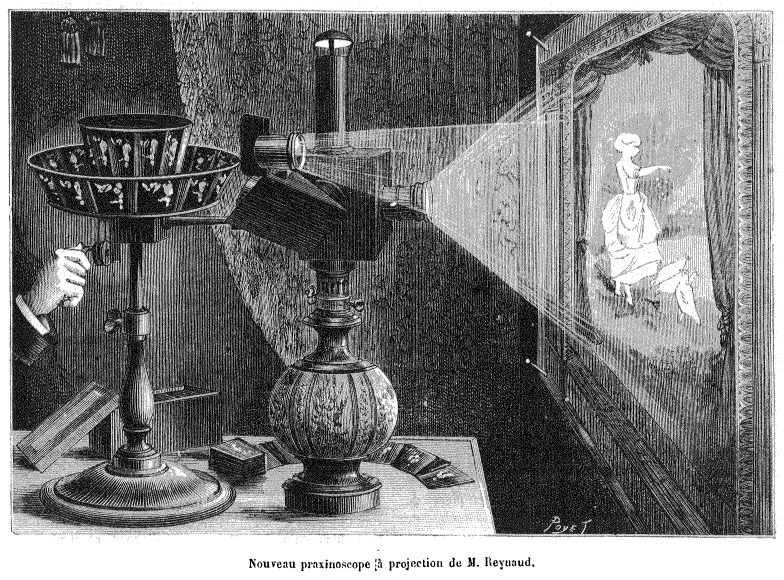 Praxinoscope was invented in 1877 by French inventor Charles-Émile Reynaud. He was a teacher by day and a inventor in his own time. He apprenticed to a precision engineer and later went on and studied with a sculpture photographer. After his fathers death in 1865 he carried on studies in Puy-en-velay gaining in a things related to projection. In 1976 he decided to invent a child's toy. It is practically the same as the Zoetrope but it used lights to project it on to the wall. This made it better as it allowed much more people to view the video.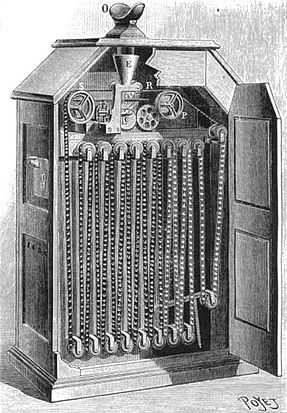
kinetoscope was invented in 1888 by Thomas Edison. Thomas Edison was one of the worlds greatest inventors of all time, inventing such things as the light bulb and the telegraph. He invented it as he wanted to create something for the eyes as the phonograph was for the ears.
Thaumatrope was invented by John Ayrton Paris or Peter Mark Roget. Paris used it as a demonstration to show how persistence of vision fully works. William Fitton was a giolagist who came up with the idea about the thaumatrope. The credit goes to either of them, but it isn't fully decided who it should go to.
History of Animation
 William O'Brien was born in America on the 2nd march 1886. He specialized in stop motion animation. During his life he has had many different jobs, such as farmhand, factory worker, fur trapper and a bartender before becoming a animator, He started off by being a sculpture and a illustrator. This lead him in to creating sports cartoons for the Francisco daily news. He first got the attention of Thomas Edison, who invented the Kinetoscope. He employed him to animate such films as A.F.D 10,000 BC. Two of his most famous films where "The Last World" (1925) and "Its A Mad Mad Mad Mad World" (1963)
Video of willis O' Brien The Last World

Hayao Miyazaki is a Japanese animator that was born on the 5th of January 1941. He specializes in animation, manga artistry, illustrator, producer and screen writer. his first piece of animation that he created was "The Gulliver's Travels Beyond The Moon", which was then followed by "Lupin 3" the castle of Cagliostro. After his next film "Of the Wind" in 1984 he co-founded his own animation company Studio Ghibli , Miyazaki was influenced by many different people but some of the most influential people where Yuri Norstein, a Russian animator who made "Tale Of Tales" Miyazaki also wrote a book about him. He was also influenced by Disney. He really liked their early short films like "Silly Symphonies"
A trailer from one of Hayao Miyazaki's movies.
 Nick Park was a British producer, he was born in 1958. He specialized in writing and stop motion animation. His most famous pieces of animation are "Wallace And Gromit" and "Sean The Sheep" He was always interested in drawing animations. This led to him creating his first film at age 13. Nick believes that using clay for animation is much better as it is cheaper to use and there is lots of Plasticine around to use. Claymation works by covering a metal skeleton frame in Plasticine. In which you them move the figure very slightly and take a picture after every movement. Short clip from Creature Comforts
 Otmar Gutmann was born on the 24th of April 1937. He was a German television producer, director and animator. Otmar Gutmann is mostly well known for the television program "Pingu" Pingu was made by also by using clay to create the animation. Pingu was a British-Swiss stop motion program for children. It first aired in 1986. Pingu's original name was "Hugo" when it was only a short TV program. But when it got more publicity in Switzerland they changed it to Pingu. Pingu aired from 1986-2000. The program was so successful they changed the name of the studios from "Trick Film, Studios" to "Pingu Film Studios. After Gutmann passed away all of the studios assets where sold to HiT entertainment. HiT them launched 52 episodes of Pingu but after the series finished the studios closed without any warning. Radio times called Pingu the most favorite children's program on the BBC in 2014. It also got 2nd place for the best program of the 80's. Full episode of Pingu
 Pixar where originally known as the graphics group as part of "luccasfilms" They later then separated and became their own studios which was funded by Steve Jobs the inventor and co-founder of Apple. Whilst they where a software company, most of the staff had backgrounds in animation such as hand drawn animation, stop motion animation and computer animation. Pixar specialist in 3D computer animation. Early examples of Pixar's work is "Luxo jr"and "for the birds". But since them short films they have produced 13 feature films. Most well known "Toy Story" and "Monsters Inc". In 2006 Pixar joined together with Disney, where to this day they work together in creating animation films.
 The quay Brothers where American twin brothers,Stephen and Timothy. Mostly known as the brothers key. They are very influential in stop motion, and have been praised by many around the world. They where highly influenced on European animation. They liked to pay attention to the little details in animation. They are most well known for their use of textures and the use of focus and camera movement. They have created many recognizable films such as "street of crocodile"
Media platforms and audiences
 There are many different animated TV programs on TV at the minute. Most of the programs are aimed at children with such programs as "Postman Pat" and "Bob The Builder". The link below is of the children's TV show Bob The Builder. There are some examples where stop motion animation has been user for a older target audience. For example with the program"Angry Kid"
Stop Motion Animated TV Programs
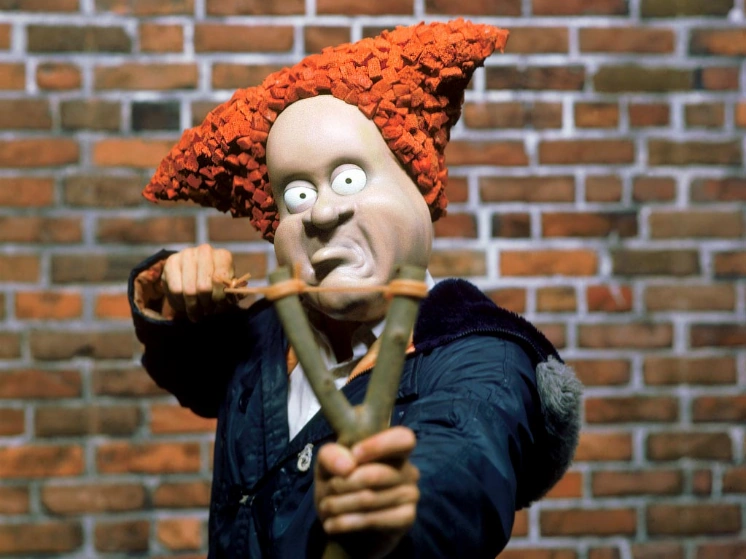 There are many different animated TV programs on TV at the minute. Most of the programs are aimed at children with such programs as "Postman Pat" and "Bob The Builder". The link below is of the children's TV show Bob The Builder. There are some examples where stop motion animation has been user for a older target audience. For example with the program"Angry Kid"
Stop Motion Films
Stop motion films are mainly aimed at teenagers and adults as Tim Burton is leading the way with his signature Gothic horror animations. Many of them are well knows like "Frankenweenie" and Corpse Bride" But there are some stop motion films targeted at children, for example "James And The Giant Peach" and "Wallace And Gromit A Close Shave". The video below is the full episode of "Wallace And Gromit A Close Shave"
Stop Motion Advertisement
Using stop motion animation for an advert is a good way to attract people to the product as it is prophetically pleasing. A good example of this was the advert for John Lewis last Christmas. They used cardboard cutouts to create the animation. This is mainly targeted at younger people with the characters and the story. But other adverts like Target's "Dreaming Girl" advert is targeted at adults.
Stop Motion Animation Music Videos
The best example I could find of stop motion animation being used in a music video is the one below of Coldplay "Strawberry Swing". They cleverly used stop motion and skilled drawing to create this beautiful video of a man on the floor doing various things whilst the background changes around him, which is done by drawing on the floor with chalk.

No comments:
Post a Comment